Every door is a decision: insulate or hemorrhage.
Seal crews arrive with calibrated thermal cameras and blower-door rigs. We find every gap where conditioned air bleeds through your building envelope — and we seal it, permanently.
01 — The Problem
The leak you can't see
is the one costing you most.
Air infiltration through door frames and thresholds accounts for up to 40% of uncontrolled energy loss in commercial buildings. It's invisible to the naked eye — but not to our cameras.
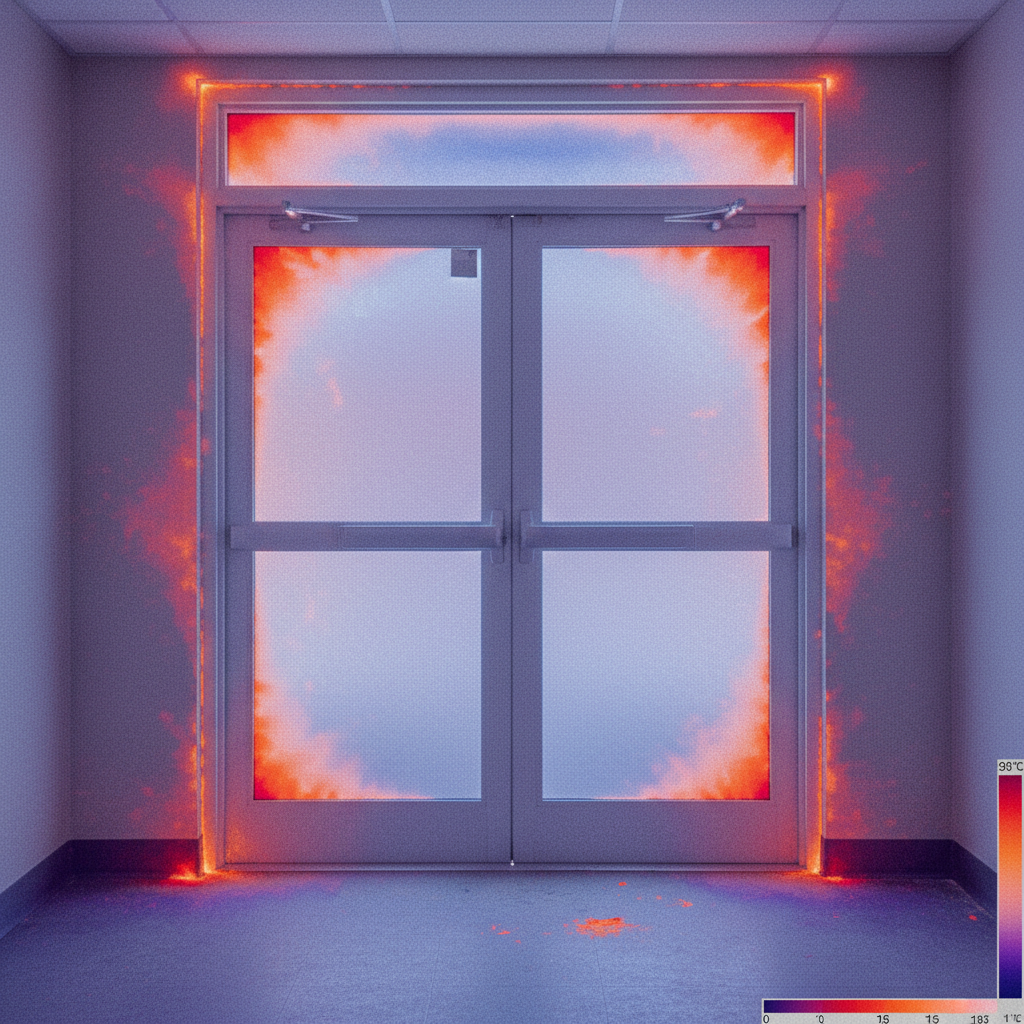
Δ38.4°F — Door Frame Infiltration
Diagnostic Sample — 8-Story Office, Chicago IL
Annual total — unsealed
$3,263
per building entry cluster
After Seal
$390
residual loss
0.35
ACH natural
Avg. infiltration rate, unsealed commercial door
40%
of envelope loss
Attributed to door frames and thresholds
15%
YoY utility climb
Reported by ops directors with aging door seals
< 18 mo
payback
Typical ROI period after full-building seal program
02 — The Audit Process
Three hours of diagnostic work.
Decades of leakage made visible.
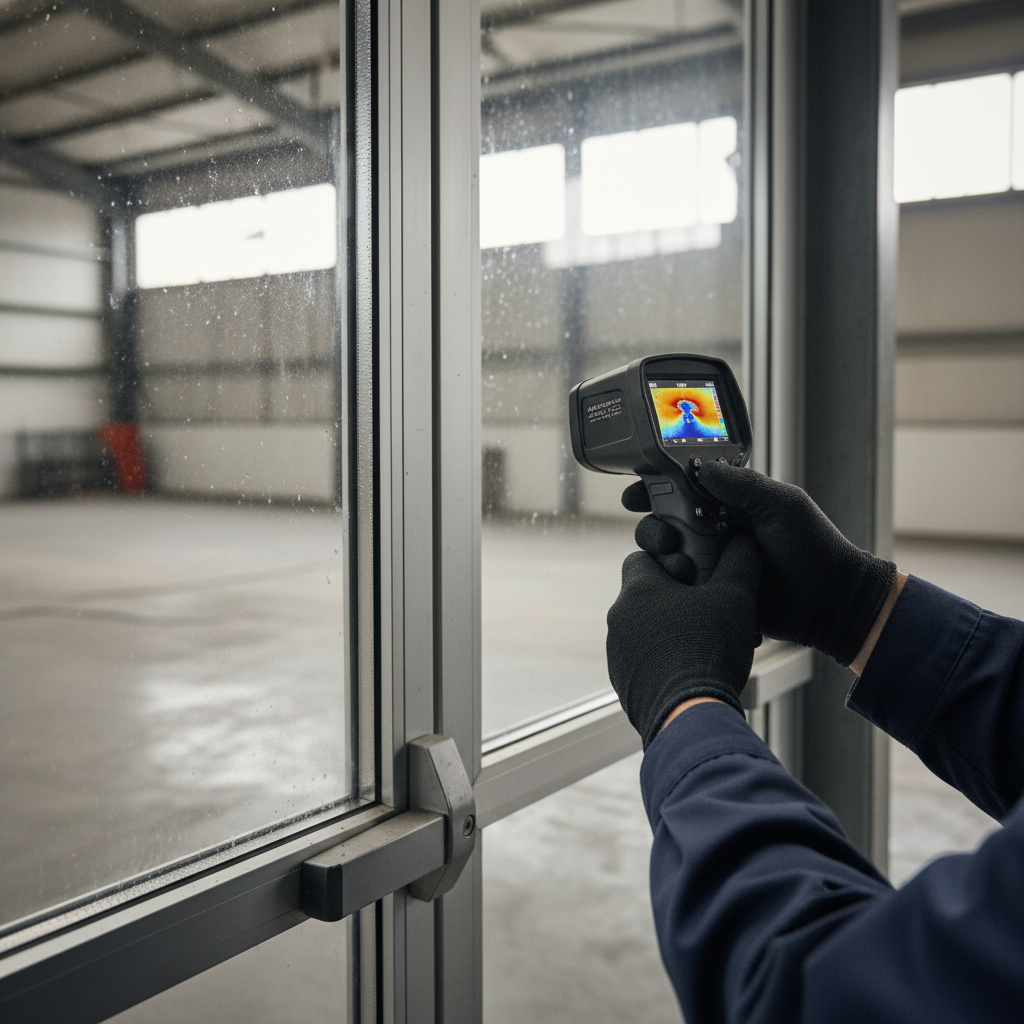
Thermal Camera Survey
A Seal technician walks every exterior door with a calibrated FLIR T530 thermal camera. Temperature differentials of ≥ 3°F flag infiltration zones. Every frame, threshold, astragal gap, and hinge-side clearance is logged.
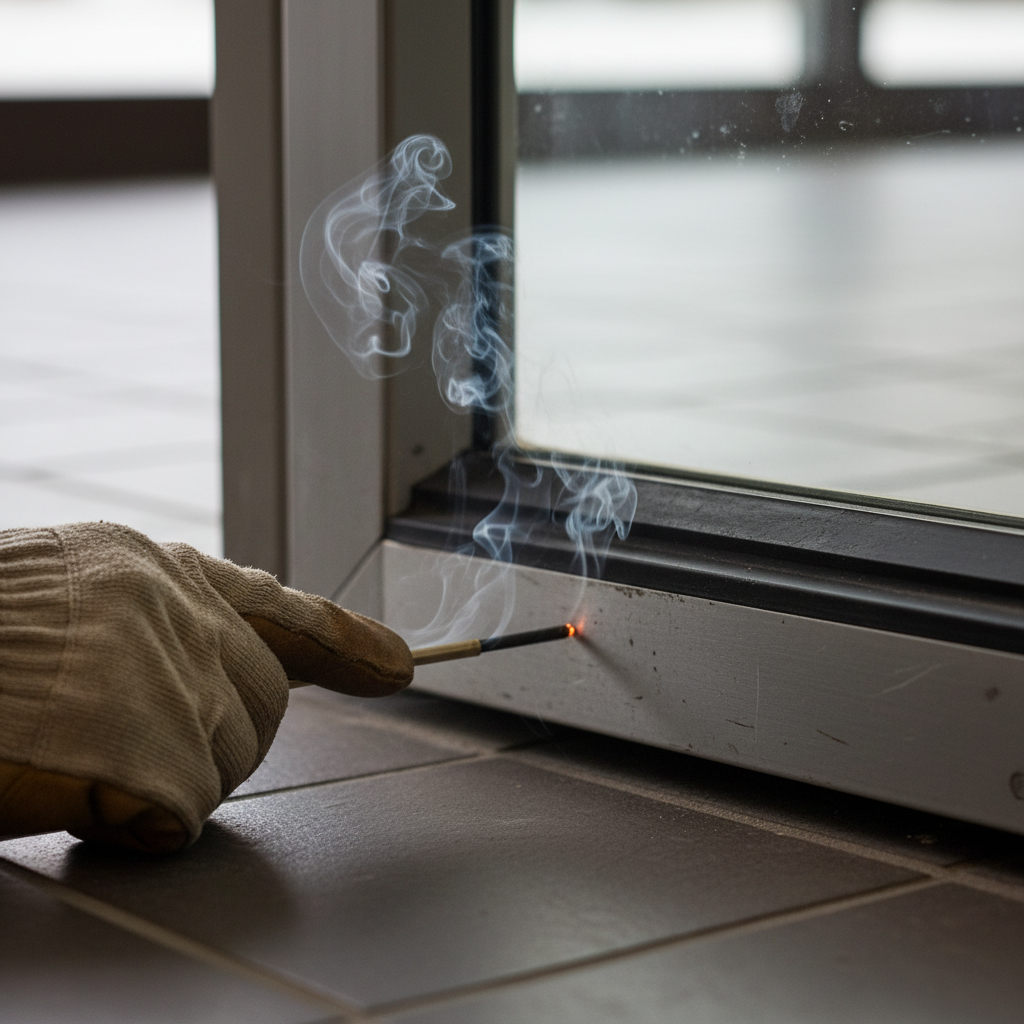
Blower Door Pressurization Test
We mount a calibrated blower-door fan in the primary building entry and depressurize to −50 Pa. Smoke pencils trace infiltration paths at each door while a data logger records CFM50 readings — giving you a precise air-change-per-hour baseline.

Diagnostic Report & Prioritization
Within 48 hours you receive a door-by-door PDF report: thermal images annotated with temperature readings, CFM loss per door, annual dollar cost, and a prioritized remediation schedule ranked by ROI.
03 — Material Selection
Every gap has a solution.
Every solution is load-bearing.
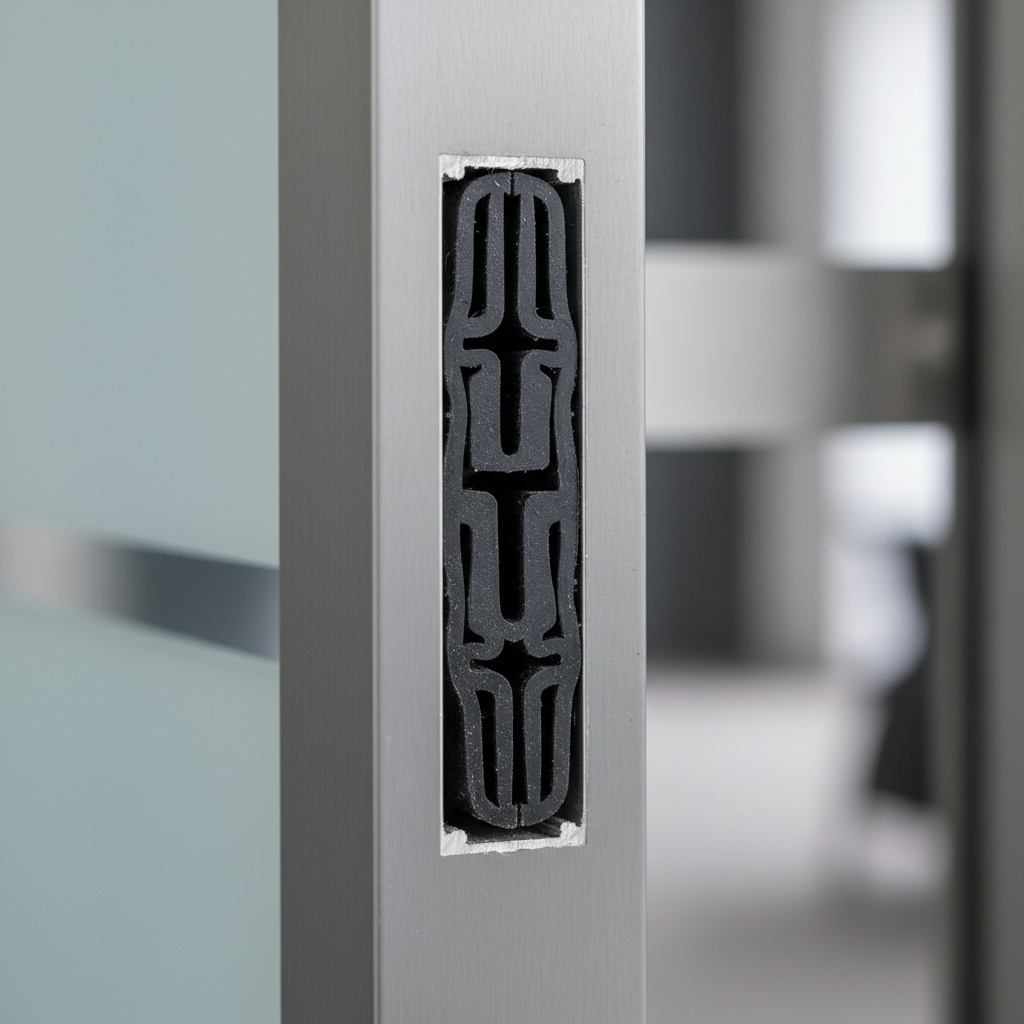
Material 01
Compression Seals
EPDM rubber · 60–90 Shore A · -40°F to +250°F
Kerf-mounted perimeter seals that compress under door contact pressure. Zero air gap at full closure. Rated for 500,000+ cycles — outlasts the door hardware.
Material 02
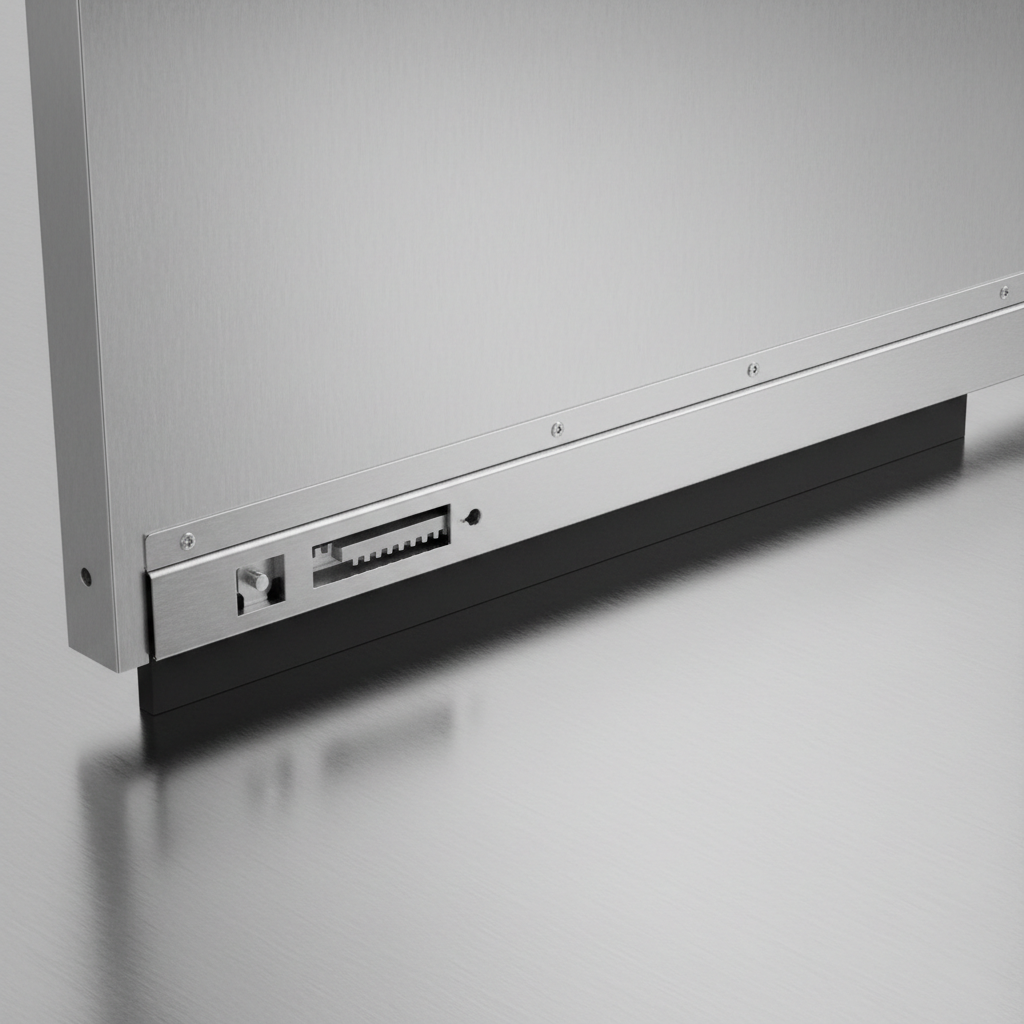
Automatic Door Bottoms
Mortised or surface-mount · Drop range: 5/8″ · Neoprene wiper
A spring-loaded aluminum bar with a neoprene wiper drops automatically as the door closes, sealing the threshold gap without any manual adjustment. Eliminates the single largest infiltration point on most commercial doors.
Material 03
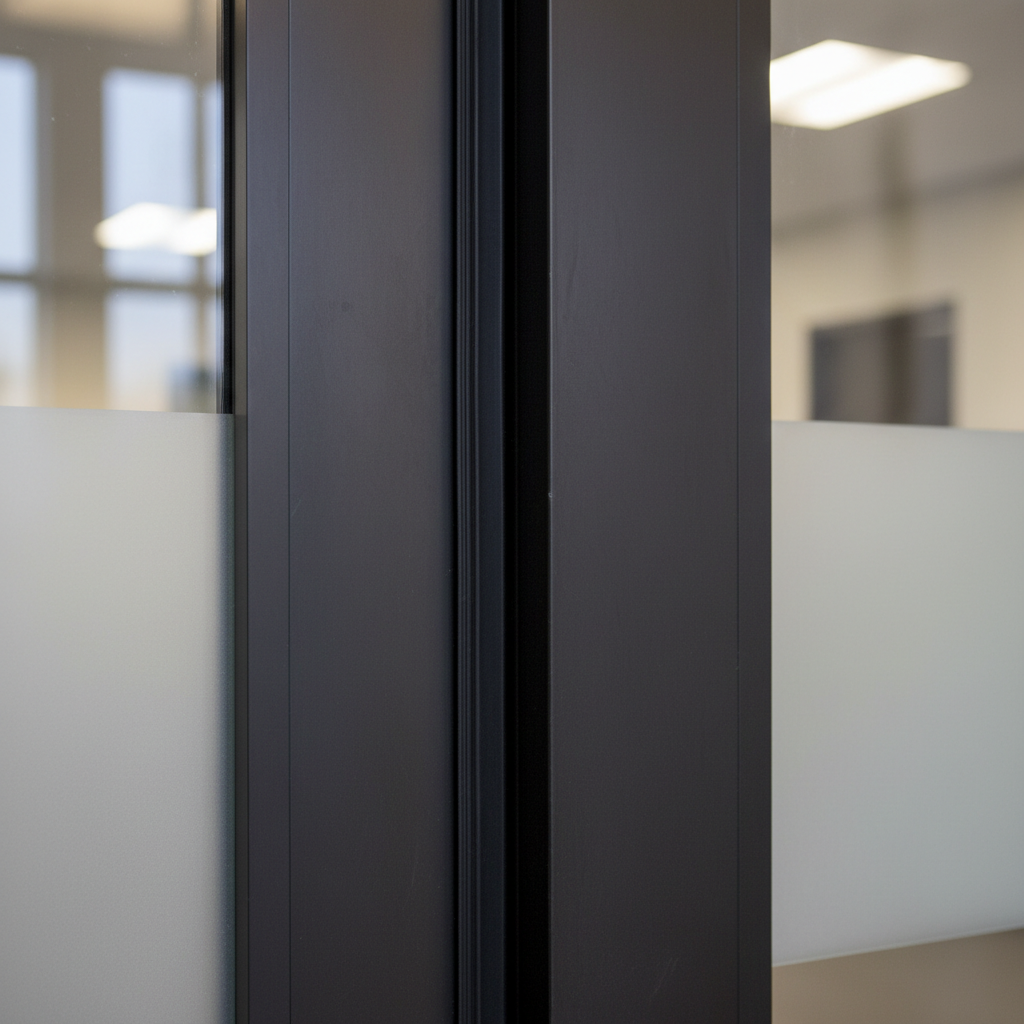
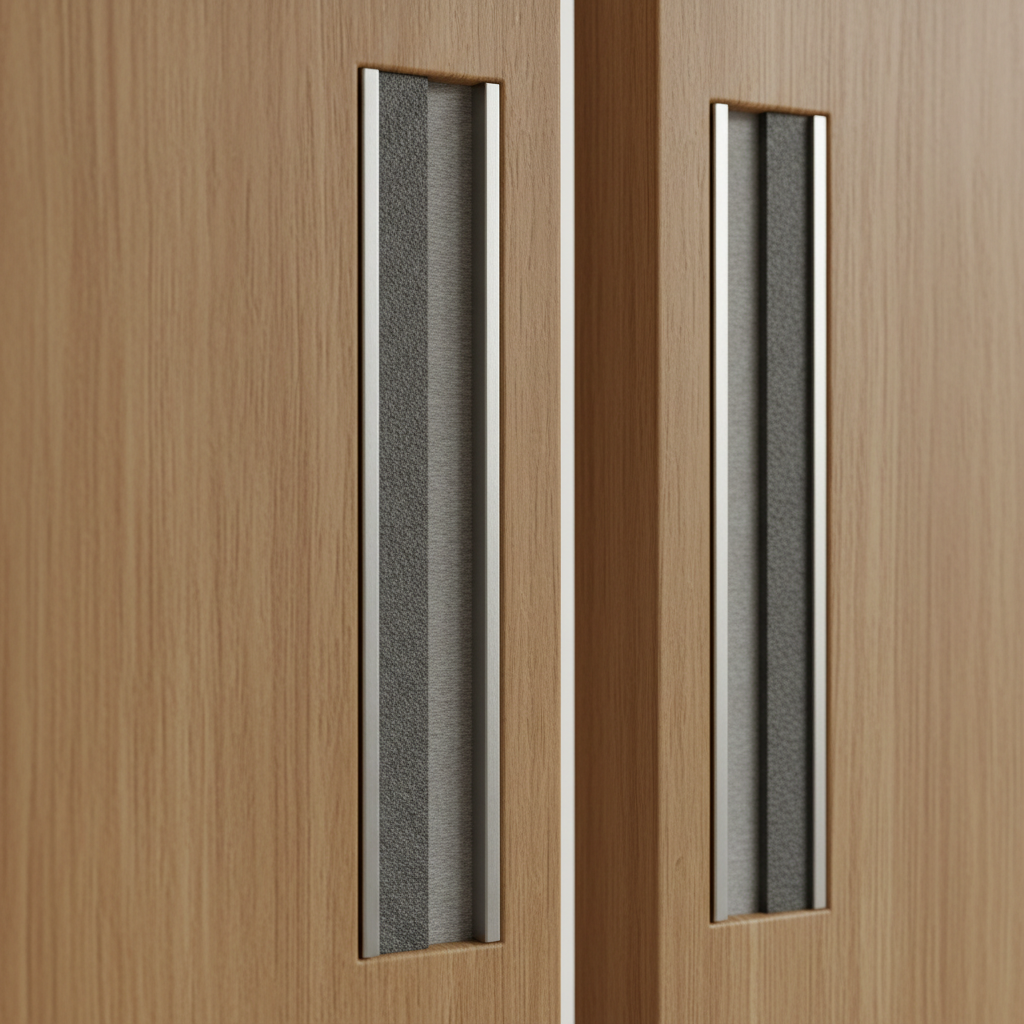
Astragals & Meeting Stile Seals
Overlapping T-astragal · 1-3/4″ door thickness · Fire-rated options
For double-door openings, the meeting stile gap is the second-largest infiltration path. Flush-bolt astragals with integrated bulb seals close this gap across the full door height, with no degradation under repeated traffic.
Material 04
Intumescent Strips
Graphite-based · Expands 10× at 392°F · UL-listed
Installed in door edge rebates, these graphite-impregnated strips provide both draft sealing under normal conditions and fire-barrier expansion at high temperature — critical for stairwell doors and fire-rated assemblies.
05 — The Proof
Same door. Same building.
Different thermal signature.
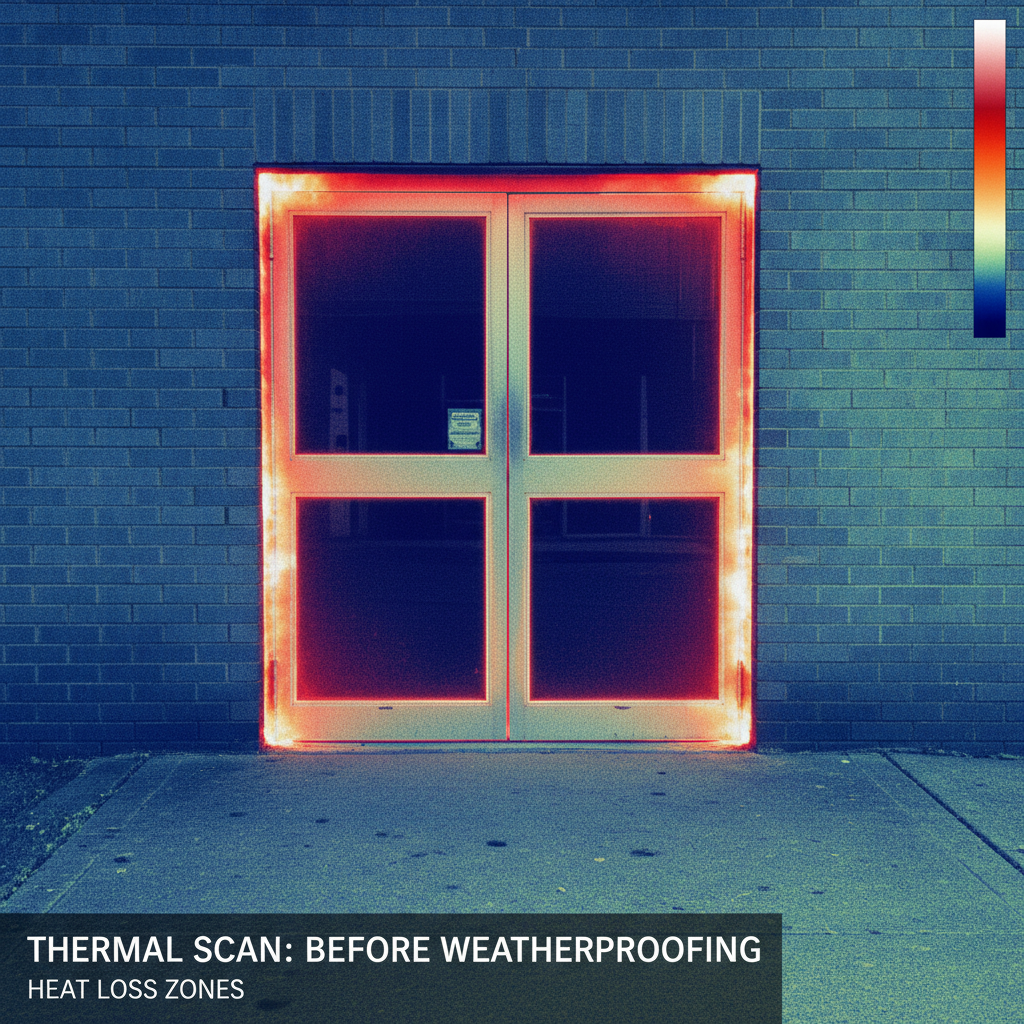
Δ38.4°F · 9,200 BTU/hr loss
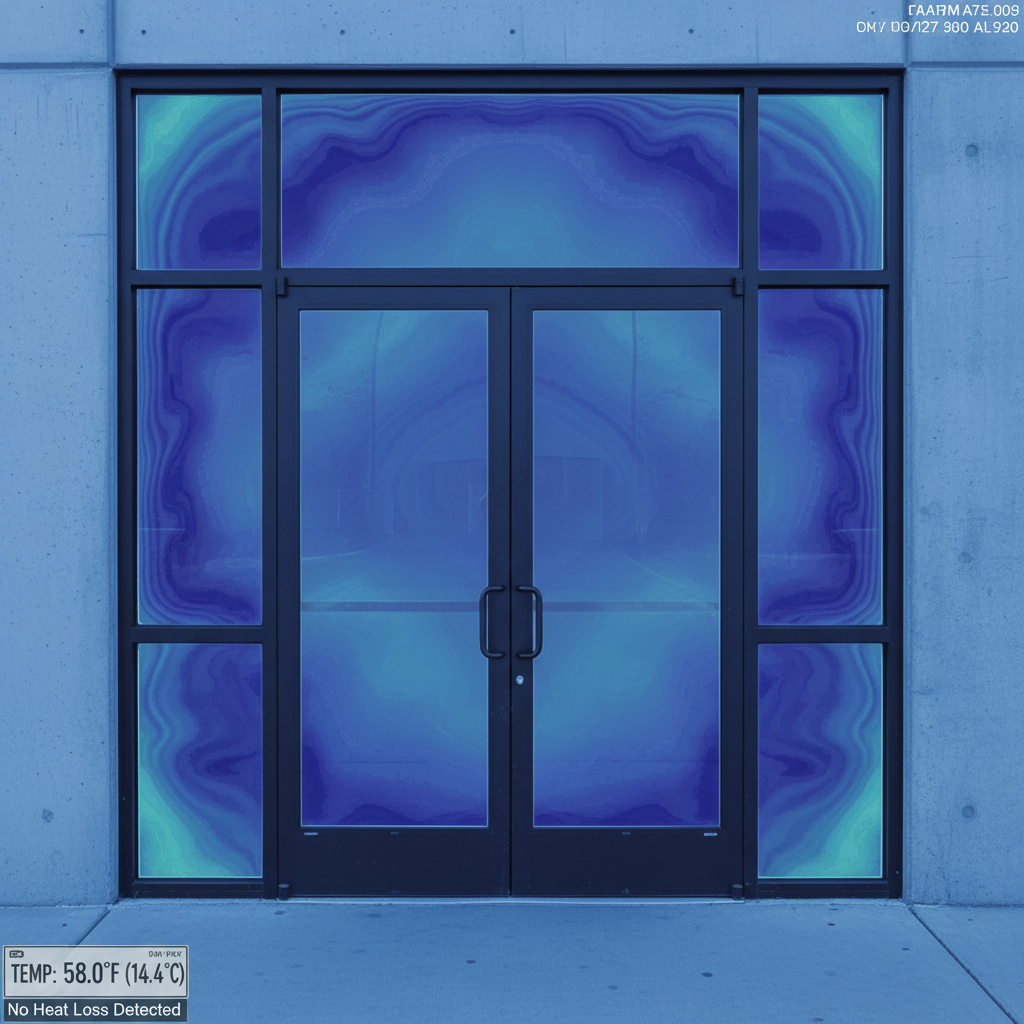
Δ2.1°F · 510 BTU/hr residual
94.5% reduction
in BTU/hr infiltration loss — same door, same building
$1,840
Avg. savings / door / yr
18 mo
Avg. payback period
Completed Projects — Verified Savings
14-Story Office Tower
Minneapolis, MN
Distribution Warehouse
Columbus, OH
Mixed-Use Retail Center
Denver, CO
Per-Door Savings Calculator
Enter your building's door count, local energy rate, and operating hours. Get a precise annual BTU-loss figure and projected payback period — before we've even visited your site.
Ready to stop the bleed?
Your building's thermal report
is one audit away.
We schedule within 5 business days. You receive a door-by-door diagnostic report within 48 hours of the site visit. No obligation to proceed — but the numbers tend to speak for themselves.